
Búsqueda avanzada
(por colaborador, editorial, año de edición, formatos)
General
How was the inventory carried out to identify future national parks and reserves? What challenges were faced? In what state were the areas finally chosen?
This book is a memoir about the role that young Christopher Vaughan played between 1971 and 1975, as a field biologist, in the newly created Department of National Parks of Costa Rica, under the direction of Mario Boza and the members of the Tropical Scientific Center, Drs. Joseph Tosi, Alexander Skutch and Leslie Holdridge.
In an entertaining manner, the author narrates his many adventures during the years of exploring 26 potential national parks and reserves, either alone or accompanied by guides or other biologists, while describing the adverse conditions that affected these areas: deforestation, burning, human settlements, gold extraction, hunting, exploitation by transnational companies and even difficult access.
Of the areas visited, more than 13 national parks and biological reserves were eventually created between 1972 and 1975, including Manuel Antonio Recreational Park (its initial name), Chirripó National Park, Corcovado National Park, Rincón de la Vieja National Park, the Guayabo National Monument, the Barra Honda National Park and five biological reserves.
This work, which is both a testimony and an adventure book, also offers a profuse amount of unpublished photographs from the time. We hope that it contributes, as the author wishes, to future generations appreciating and committing to the protection of these priceless treasures, and to the incredible biodiversity of Costa Rica, whose conservation has been the challenge of his life.
Dedication
Acknowledgements
Prologue
Introduction
Past, present and future
References
Appendix 1
Appendix 2
About the Author
| Nombre del premio | Año del premio | Premio o galardón | País del premio |
|---|---|---|---|
| Premio de la Facultad de Tierra y Mar | 1995 | ---- | Costa Rica |
| Premio Roberto Brenes Mesén | 1995 | ---- | Costa Rica |
| Doctorado Honoris causa, del Grinnell College | 2006 | ---- | Estados Unidos de América |
| Premio de Biología Tropical | 2014 | ---- | Costa Rica |
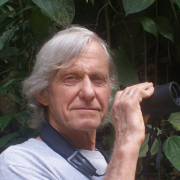
Desde 1969, Christopher Vaughan ha estudiado la vida silvestre costarricense y su relación con los seres humanos.
En 1979 obtuvo su maestría en Ordenamiento de Áreas Silvestres, otorgada por el CATIE-UCR. En el 2002 obtuvo su doctorado en Recursos Naturales en el Instituto de Estudios Ambientales, en la Universidad de Wisconsin-Madison, donde también fue profesor e investigador. En la actualidad es profesor asociado en dicha institución.
En 1985 cofundó el PRMVS, que incluía la primera maestría en Manejo de Vida Silvestre y el primer Centro de Documentación en Vida Silvestre en América Latina. Fue su primer director y además fungió como docente e investigador hasta el 2017. Asimismo, coeditó la revista Vida Silvestre Neotropical entre 1993 y el 2000. Del 2009 al 2014 dirigió el Programa de la Associated Colleges of the Midwest-Costa Rica. Ha sido autor, coautor, editor o coeditor de siete libros, y ha publicado 82 artículos científicos y 44 capítulos de libros. Sumado a ello, ha presentado 62 ponencias en congresos y simposios nacionales e internacionales. También dirigió los proyectos de tesis de 20 estudiantes.
Recibió el Premio de la Facultad de Tierra y Mar y el Premio Roberto Brenes Mesén, de la UNA (1995); el doctorado honoris causa del Grinnell College (2006), y el Premio de Biología Tropical (2014), otorgado por la Revista de Biología Tropical.
Desde 1990 coordina un proyecto de manejo in situ e investigación para la conservación de la lapa roja (Ara macao) en el Pacífico Central de Costa Rica, mediante el cual se ha logrado recuperar la población y cuadruplicar su distribución en la región.
Como complemento a esa conexión especial que tiene con la naturaleza, desde el 2009 es estudiante y practicante de budismo Shambhala.




